

Natural Gut Pathogen Fighters: Low FODMAP Guide

natural gut pathogen fighters
What Are Gut Pathogens and Why Fight Them Naturally?
Common Gut Pathogens Like SIBO and Candida
Gut pathogens include bacteria, yeast, and parasites that disrupt digestive balance. Small intestinal bacterial overgrowth (SIBO) occurs when bacteria colonize the small intestine in excess, producing gas and causing bloating, pain, and irregular motility. Candida overgrowth, a yeast imbalance, can contribute to fatigue and digestive discomfort. Both conditions are increasingly recognized as overlapping with IBS symptoms, making dietary management a practical first line of support.
Benefits of Natural Fighters Over Synthetics
Pharmaceutical antimicrobials can be effective but carry real trade-offs: disrupted microbiome diversity, antibiotic resistance, and a tendency to recur. Natural antimicrobial compounds--found in ginger, turmeric, and peppermint oil--tend to act more selectively. Research published in journals like Phytomedicine and Gut Microbes suggests these compounds can inhibit pathogenic strains while leaving beneficial bacteria largely intact. They also slot into a cooking-based approach rather than a supplement-only protocol, which matters for long-term consistency.
Role of Diet in Microbiome Balance
Diet shapes microbial composition faster than most people expect--measurable shifts in gut bacterial populations can occur within 24 hours of a dietary change. A low FODMAP approach reduces fermentable substrates that feed overgrowth, while strategic inclusion of low FODMAP natural gut pathogen fighters adds direct antimicrobial support. This dual action--reducing fuel and adding targeted defense--is why diet remains the foundation of most evidence-based gut protocols.
Top Low FODMAP Natural Gut Pathogen Fighters

Ginger: Antimicrobial Power for Digestion
Ginger (Zingiber officinale) contains gingerols and shogaols, compounds with documented antimicrobial activity against H. pylori and several pathogenic bacterial strains. Per Monash University data, fresh ginger is low FODMAP at 1 teaspoon (5 g) per serving; ground ginger clears at ¼ teaspoon. It may also support gastric emptying--a meaningful benefit when slow motility is amplifying bloating and discomfort.
Turmeric and Coconut: Anti-Inflammatory Allies
Curcumin, turmeric's active compound, inhibits the growth of several gut pathogens and modulates inflammatory cytokines in the gut lining. Low FODMAP serving: 1 teaspoon ground. Coconut oil contributes lauric acid, a medium-chain fatty acid with antimicrobial properties against Candida species--1 tablespoon per serving keeps you in range. Coconut milk is low FODMAP at ½ cup (120 mL) per Monash guidelines.
Peppermint and Lemon: Everyday Gut Soothers
Peppermint oil's menthol content relaxes intestinal smooth muscle and demonstrates inhibitory effects against E. coli and Salmonella strains in vitro. Peppermint tea (1 cup brewed) is low FODMAP. Fresh lemon juice provides citric acid with mild antimicrobial properties and is safe in standard culinary amounts. Both integrate easily into daily cooking without needing a dedicated supplement routine.
| Ingredient | Active Compound | Low FODMAP Serving | Primary Action |
|---|---|---|---|
| Fresh Ginger | Gingerols | 1 tsp (5 g) | Antibacterial, motility support |
| Turmeric | Curcumin | 1 tsp ground | Anti-inflammatory, antifungal |
| Coconut Oil | Lauric acid | 1 tbsp | Antifungal (Candida) |
| Peppermint | Menthol | 1 cup tea | Antibacterial, antispasmodic |
| Lemon Juice | Citric acid | Standard culinary use | Antimicrobial, digestive aid |
Probiotics, Prebiotics, and Antimicrobials Explained
How Each Targets Bad Bacteria
These three categories work through distinct mechanisms--and using only one leaves gaps. Probiotics introduce beneficial bacterial strains that compete with pathogens for adhesion sites and nutrients. Prebiotics selectively feed those beneficial strains, giving them a population advantage over time. Natural antimicrobials go a step further by directly inhibiting or killing unwanted organisms. Someone managing SIBO, for example, may need antimicrobial herbs first, then strategic probiotic reintroduction once overgrowth is under control.
Low FODMAP Sources for Sensitive Guts
| Category | Low FODMAP Source | Serving Size (Monash) | Primary Action |
|---|---|---|---|
| Probiotic | Lactose-free yogurt | ¾ cup (170 g) | Replenishes Lactobacillus strains |
| Probiotic | Firm tofu | 170 g | Fermented soy; microbiome support |
| Prebiotic | Ground flaxseed | 1 tablespoon (10 g) | Feeds Bifidobacterium strains |
| Prebiotic | Unripe banana | 1 medium (100 g) | Resistant starch; feeds colonocytes |
| Antimicrobial | Fresh ginger | 1 teaspoon (5 g) | Inhibits pathogenic bacterial strains |
| Antimicrobial | Peppermint tea | 1 cup brewed | Menthol disrupts pathogen membranes |
High FODMAP prebiotic sources like chicory root, inulin, and Jerusalem artichoke are frequently recommended for gut health, but they can worsen symptoms in sensitive individuals. The low FODMAP options above deliver prebiotic benefits without the fermentation load that triggers bloating.
Combining Them for Microbiome Support
Sequencing often matters more than using everything at once. During suspected overgrowth, prioritizing natural antimicrobials like ginger and peppermint may help create space for beneficial bacteria to gain ground. Once symptoms stabilize, prebiotic foods introduced gradually can support microbial diversity. Probiotic foods can be woven in throughout, with serving sizes monitored carefully. This layered approach reflects the structured process that many registered dietitians use in low FODMAP reintroduction protocols.
One area worth watching: ongoing research into the gut-brain axis continues to explore how dietary antimicrobials may affect the enteric nervous system alongside the microbiome. Ginger and peppermint, already used for motility support, are being studied for broader neuroenteric effects. None of that changes current dietary guidance, but it does support the case for using these ingredients consistently rather than sporadically. See the research on ginger and peppermint's neuroenteric activity.
Low FODMAP Swaps for Onion and Garlic in Gut Recipes
Why Common Alternatives Fail Sensitive Guts
Many "onion-free" and "garlic-free" recipes still include shallots or garlic-infused oil made with garlic bulbs. Shallots are high FODMAP. Garlic-infused oil is low FODMAP only when the solids are fully removed--which some products don't reliably guarantee. For anyone managing IBS or building gut-protective meals, hidden fructan sources can quietly undo careful planning.
Garlic Scape and Chive Powders as Flavor Boosters
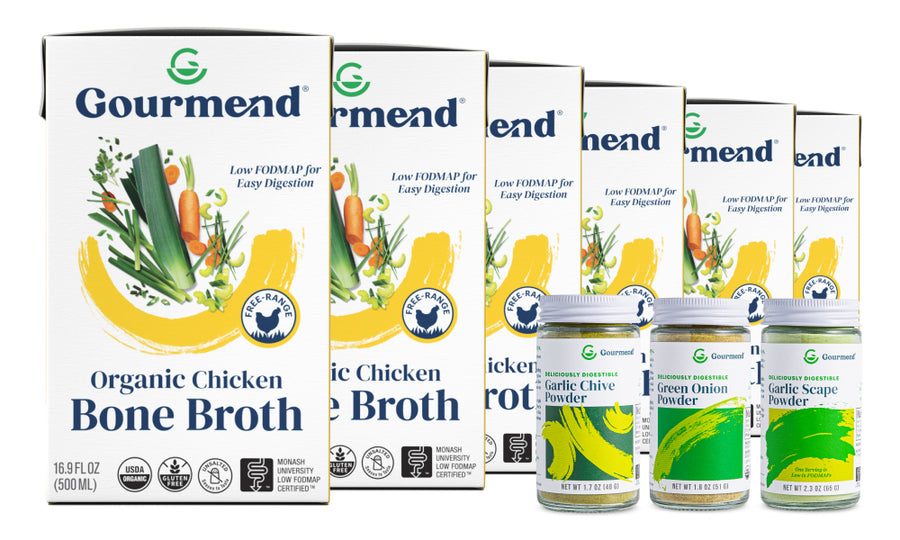
Gourmend Foods makes Garlic Scape Powder and Garlic Chive Powder, both Monash University Low FODMAP Certified. The fructans in these plants concentrate in the bulb--not the green tops or scapes--so they deliver garlic-forward flavor (sweeter and milder than the bulb, but unmistakably savory) without the fermentable carbohydrates that trigger symptoms. A ½ teaspoon of Garlic Scape Powder replaces roughly one clove in most recipes. The Gourmend Sampler includes both powders alongside Green Onion Powder, making it a practical starting kit for anyone rebuilding a spice drawer around gut-friendly cooking.
Building Umami with Nori and Oyster Mushrooms
Onion and garlic contribute more than pungency--they build savory depth. Nori seaweed and oyster mushrooms can recreate that umami foundation at low FODMAP portions. Gourmend's Organic Beef Bone Broth uses both for exactly this purpose, producing a stock with the rounded, savory quality typically associated with allium-heavy recipes. Crumbled nori (1 sheet) stirred into soups or grains, or sautéed oyster mushrooms (75 g per Monash), rounds out dishes that might otherwise fall flat without garlic and onion.
Gut-Friendly Recipes with Pathogen-Fighting Ingredients

Ginger Turmeric Bone Broth Soup
Ingredients: 2 cups (480 mL) Gourmend Organic Chicken Bone Broth, 1 tsp fresh ginger grated (5 g), 1 tsp ground turmeric, 1 tsp Gourmend Garlic Scape Powder, 75 g oyster mushrooms, 1 cup (180 g) cooked rice noodles, 1 tbsp coconut oil, fresh lemon juice to taste.
Method: Warm coconut oil in a saucepan over medium heat. Add mushrooms and cook for 4 minutes. Add broth, ginger, turmeric, and Garlic Scape Powder. Simmer for 8 minutes. Add noodles and finish with lemon juice. Serves 2.
FODMAP note: Keep oyster mushrooms at 75 g per serving. Rice noodles are low FODMAP at up to 200 g cooked.
Low FODMAP Berry Ginger Smoothie
Works Well
- Blueberries (40 g) and strawberries (140 g) are low FODMAP per Monash servings.
- Fresh ginger (5 g) adds antimicrobial support without changing flavor too much.
- Lactose-free yogurt (170 g) contributes probiotic cultures and protein.
Watch These
- Avoid honey as a sweetener; use maple syrup (1 tbsp maximum) instead.
- Coconut water can exceed low FODMAP limits above 100 mL; use still water to thin.
Combine all ingredients in a blender. This smoothie packs two natural gut pathogen fighters (ginger and berries) plus probiotic yogurt into a single low FODMAP meal. The Gourmend Sampler pairs well with savory applications of the same principles, keeping ingredient standards consistent across your whole kitchen.
This information is for educational purposes. Consult a registered dietitian or healthcare provider for personalized advice.
Building Your Gut-Protective Kitchen
Supporting microbiome balance through natural gut pathogen fighters doesn't require a separate supplement protocol. Many of the same kitchen staples that build flavor--ginger, turmeric, peppermint, coconut oil, lemon--carry antimicrobial properties at low FODMAP serving sizes. The difference between using them occasionally and getting real benefit from them comes down to consistency, sequencing, and sourcing.
Start with what you can control at the ingredient level. Replace high FODMAP alliums with certified alternatives. Build savory depth through nori and oyster mushrooms rather than garlic and onion bulbs. Use Gourmend Foods bone broths as a cooking base that already reflects these principles--so you're not rebuilding every recipe from scratch.
For anyone starting fresh with a gut-friendly spice drawer, the Gourmend Sampler is a sensible entry point. It consolidates Garlic Scape Powder, Garlic Chive Powder, and Green Onion Powder into one order, giving you the full range of allium-free flavor tools covered in this guide.
The science gives you the rationale. The recipes show you how to use it. What's left is cooking with more intention--and spending a lot less time second-guessing labels.
This information is for educational purposes. Consult a registered dietitian or healthcare provider for personalized advice on managing gut health conditions.
Frequently Asked Questions
What natural foods and herbs can fight gut bacteria?
Natural foods and herbs like ginger, turmeric, coconut oil, peppermint, and lemon contain compounds that can inhibit harmful gut bacteria and yeast. For example, gingerols in fresh ginger and curcumin in turmeric have documented antimicrobial activity. These ingredients can be easily incorporated into your cooking to support gut balance.
Why choose natural fighters over synthetic options for gut health?
Natural antimicrobial compounds, found in many foods, tend to act more selectively against pathogens while preserving beneficial gut bacteria. Unlike some pharmaceuticals, they carry a lower risk of disrupting microbiome diversity or contributing to antibiotic resistance. This approach fits well into a cooking-based strategy for gut balance.
How can diet help reduce bad bacteria in the gut?
Diet plays a foundational role in shaping your gut microbiome, with measurable shifts occurring rapidly. A low FODMAP approach helps by reducing fermentable substrates that can feed bacterial overgrowth in the small intestine. Combining this with natural gut pathogen fighters adds targeted defense, reducing fuel and directly inhibiting unwanted organisms.
What role do ginger and turmeric play in fighting gut pathogens?
Ginger, with its gingerols and shogaols, offers antimicrobial action against various pathogenic bacterial strains and can support gastric emptying. Turmeric's active compound, curcumin, inhibits pathogen growth and helps modulate inflammation in the gut lining. Both are flavorful additions to meals and are low FODMAP in specific serving sizes.
What's the difference between probiotics, prebiotics, and natural antimicrobials for gut balance?
These three work differently to support gut health. Probiotics introduce beneficial bacterial strains to compete with pathogens, while prebiotics selectively nourish existing good bacteria. Natural antimicrobials, on the other hand, directly inhibit or kill unwanted microorganisms. Understanding these distinct mechanisms helps in building a comprehensive dietary strategy.
Are there low FODMAP natural gut pathogen fighters for sensitive guts?
Absolutely! Many natural gut pathogen fighters are also low FODMAP, making them suitable for sensitive guts. Fresh ginger, ground turmeric, coconut oil, peppermint tea, and lemon juice are all examples that offer antimicrobial benefits without triggering common IBS symptoms. It's about choosing the right ingredients and mindful serving sizes.